Noticing changes in a loved one’s memory or daily functioning can be concerning. Understanding the early signs of Alzheimer’s you shouldn’t ignore can help families take proactive steps, access support, and plan for the future.
At Senior Home Transitions, we provide guidance for families navigating early-stage dementia with compassion and clarity.
Trusted organizations like the Alzheimer’s Association and the National Institutes of Health emphasize that early detection improves quality of life and opens doors to treatment, care, and support resources.
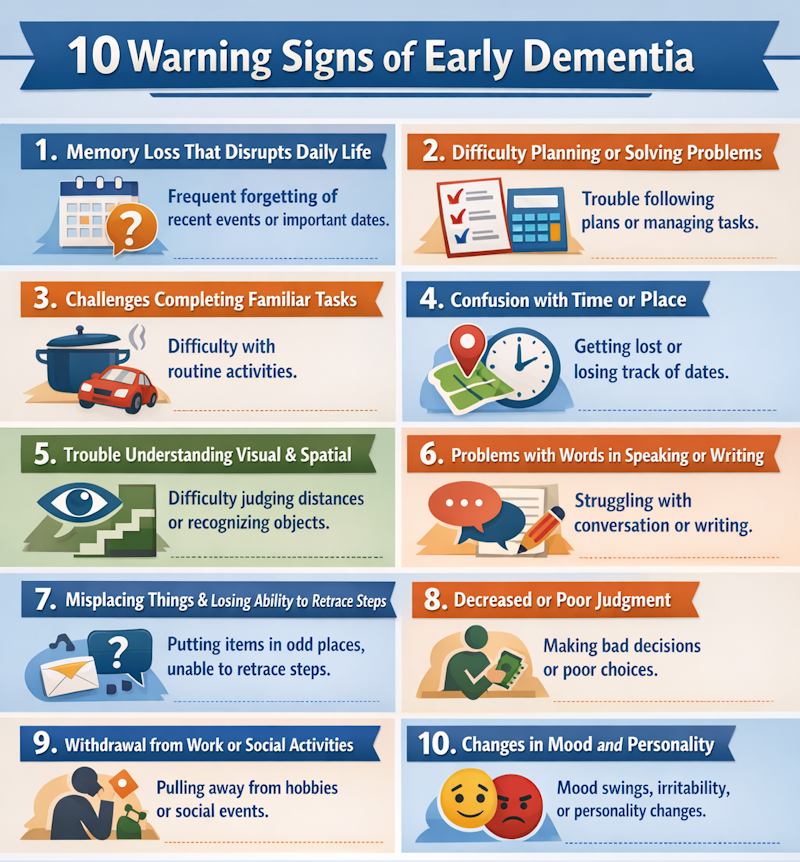
1. Memory Loss That Disrupts Daily Life
Forgetting recent conversations, appointments, or important dates repeatedly can indicate more than normal aging. People may rely heavily on reminders, calendars, or family members to manage basic tasks.
Persistent short-term memory lapses that affect work, finances, or home routines are a hallmark of early-stage dementia.
2. Difficulty Planning or Solving Problems
Tasks that were once simple, such as following a recipe, balancing a checkbook, or managing a budget, may suddenly feel overwhelming. Struggling to develop or follow plans, make decisions, or solve everyday problems can be an early symptom of cognitive decline.
3. Challenges Completing Familiar Tasks
Activities that used to come naturally — cooking a meal, managing medications, driving to familiar locations — may become confusing or difficult. Repeatedly forgetting steps or needing instructions multiple times is a sign that the brain is struggling to organize routine tasks.
4. Confusion with Time or Place
A person may lose track of dates, seasons, or the passage of time. They might forget where they are, how they got there, or how to return home from familiar places. This disorientation is more serious than occasionally forgetting the day of the week.
5. Trouble Understanding Visual Images and Spatial Relationships
Difficulty reading, judging distances, or interpreting shapes and colors can affect everyday activities, such as driving, cooking, or navigating stairs. Early-stage Alzheimer’s may impair the ability to recognize objects, landmarks, or spatial layouts.
6. Problems with Words in Speaking or Writing
People may struggle to follow conversations, find the right words, or repeat themselves often. Written communication can also be affected, with frequent spelling errors, incomplete sentences, or difficulty conveying ideas clearly.
7. Misplacing Things and Losing the Ability to Retrace Steps
It’s common for people to misplace items occasionally. However, consistently putting things in unusual places and being unable to retrace steps or recall where items were left is a warning sign of early cognitive impairment.
8. Decreased or Poor Judgment
Making uncharacteristically poor decisions, such as giving away money, neglecting personal hygiene, or making unsafe choices, may indicate a decline in executive function, like the ability to plan, reason, and think critically.
9. Withdrawal from Work or Social Activities
A person may lose interest in hobbies, social gatherings, or professional activities they once enjoyed. Early-stage dementia can lead to avoidance of situations that are mentally challenging or emotionally taxing.
10. Changes in Mood and Personality
Mood swings, irritability, anxiety, depression, or uncharacteristic suspicion can all be early warning signs. Personality changes, such as apathy or withdrawal, often accompany cognitive changes in the early stages of Alzheimer’s disease.
What to Do If You Notice Signs of Alzheimer’s
If you observe these warning signs:
Document Symptoms
Keep a record of memory lapses, behavioral changes, and daily challenges.
Schedule a Medical Checkup
A doctor can begin the Alzheimer’s diagnosis process, including cognitive testing, imaging, and lab tests.
Reassure Yourself and Your Loved One
Early detection allows for interventions that improve quality of life and independence.
Plan for Care and Support
Early recognition allows families to plan proactively:
- Discuss living arrangements and safety at home
- Explore senior home or assisted living options, if needed
- Establish legal and financial plans for the future
- Coordinate with caregivers or family members for consistent support
Educate Yourself About Alzheimer’s
Learning about early-stage dementia helps families feel more confident and prepared. Trusted sources include:
- Alzheimer’s Association
- National Institutes of Health
Understanding common warning signs, progression patterns, and treatment options empowers families to make informed care decisions.
How Families and Caregivers Can Offer Support
Supporting someone in the early stages of Alzheimer’s involves patience, understanding, and structured care:
- Maintain consistent routines to reduce confusion
- Communicate clearly and calmly, using simple instructions
- Encourage social engagement and hobbies they enjoy
- Monitor safety at home (kitchen, bathroom, and living spaces)
- Seek caregiver resources and support groups for guidance and emotional support
These steps can make daily life easier and preserve dignity and independence for longer.
Frequently Asked Questions
Taking the Next Step Toward Early Diagnosis
Recognizing the early signs of Alzheimer’s can make a real difference in quality of life. Memory loss, difficulty completing familiar tasks, confusion, mood changes, and withdrawal from activities are all signals to seek professional evaluation.
Early consultation with a healthcare provider allows families to access treatment, support, and resources sooner, giving individuals a chance to maintain independence and plan for the future.
At Senior Home Transitions, we are here to help families navigate care decisions and find the right senior home for loved ones with early-stage dementia.
Awareness, early recognition, and proactive support are the first steps toward better care, hope, and dignity.
Contact us today to find the right home.